
Chimney inspections in St. Cloud.
Six parts, one at a time: that is how a small fault gets found before it spreads. Phone the office or send the form, whichever is simpler, and we will arrange a visit.
- Based in St. CloudOsceola County
- We call youA day is picked together
- Request formAlways open
What an inspection looks at.
Six parts, checked in order, from the roofline down to the hearth.
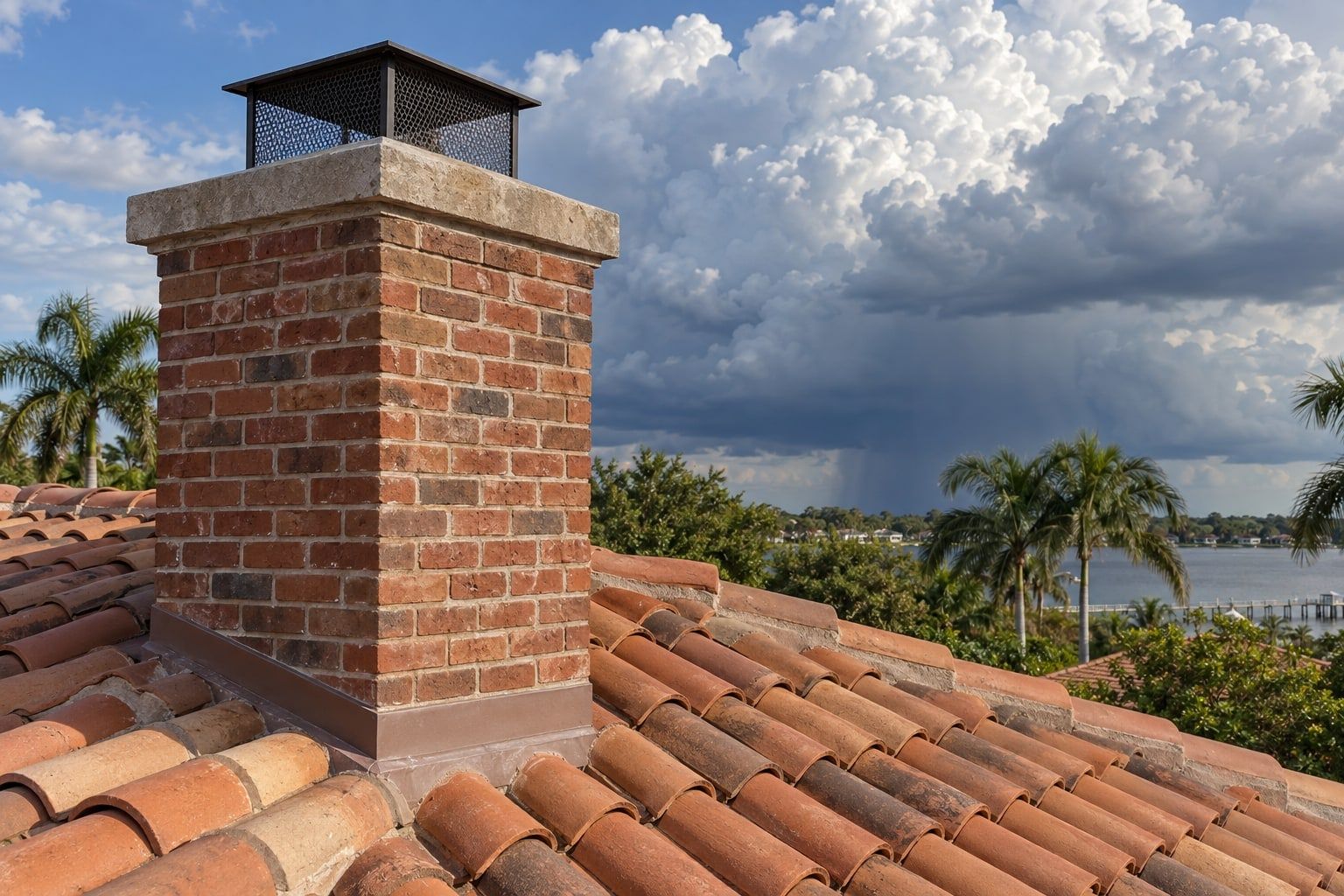
The cap, topping the stack.
Sun, sudden downpours and gusts strike the cap before any other part. Its lid sheds rain, and the mesh underneath holds sparks in and keeps animals out.
Look fordented lids from storms, mesh working loose, rusty fasteners
The crown, beneath the lid.
A fine crack in the crown drinks in rain during a downpour and keeps the damp for days. Florida's code wants a top sloped to drain, with a drip edge and a caulked break where it meets the liner (R1003.9.1).
Look forfine cracks, chipped edges, a slab separating from the flue tile, a missing drip edge
The flashing at the roofline.
Flashing, the metal collar at the roof, seals the seam between masonry and roofing; any lifted edge lets wind-driven rain in. A chimney wider than 30 inches parallel to the ridge, and clear of the ridgeline, also needs a cricket (R1003.20).
Look forcurling edges, split sealant, rust streaks, a damp ceiling below, a wide stack with no cricket
The liner, inside the masonry.
The liner is the route smoke and fumes take out of the house, and Florida's code requires one in masonry chimneys (R1003.11). A median build year of 2003 means the typical St. Cloud flue has served for more than two decades, enough years for a tile to move out of place or a metal seam to corrode.
Look forseams that have opened, tiles broken or out of place, a liner that does not match the appliance
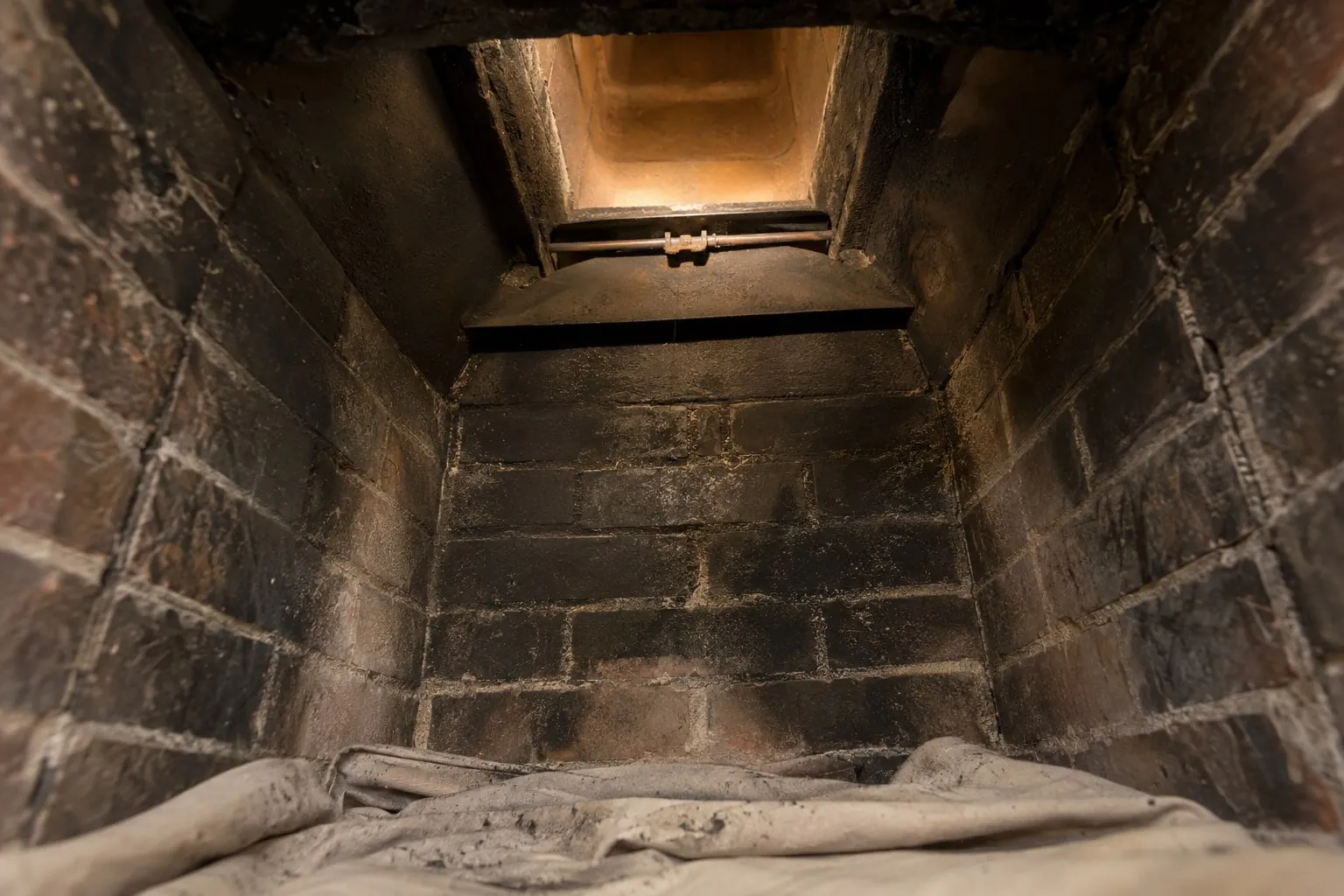
The smoke chamber and damper.
Deposit builds first on the shelf above the damper. A handful of fires per year fills it gradually, yet it never stands empty.
Look fora glossy or tarry build-up, a damper that will not shut, a shelf that crumbles or tilts
The firebox, at the hearth.
Each fire heats the firebox walls, and as years pass the firebrick crazes and the joints slacken. A thin gap is a small repair; heat reaching the framing behind it is a larger one.
Look forgaps between bricks, firebrick that cracks or sheds flakes, a hearth that shifts underfoot
The three inspection levels.
NFPA 211 sets out three inspection levels. Each goes deeper than the one before.
Level 1
A chimney in everyday use, unchanged for some time.
Includes Anything visible or within reach with the chimney as it stands, nothing dismantled.
Level 2
Buying, selling or inheriting a home; swapping the appliance; a chimney fire; or any event that could have hurt the system.
Includes Level 1 in full, then the attic and crawl space, and a camera drawn through the flue.
Level 3
A concealed defect is still suspected after a Level 2 inspection.
Includes Level 2 plus the concealed areas, opened up if that is what it takes.
Source: the Chimney Safety Institute of America (CSIA) summary of the three NFPA 211 inspection levels.Book an inspection
Good times to book an inspection.
A fault found only once it shows is found late. These are the occasions that make a visit worthwhile.
Questions about inspections.
Short answers, with a source where there is one.
Is an annual inspection mandatory by law?
NFPA 211 recommends it. Whether local codes make it compulsory for your house is a separate question; sweeping depends on how much you burn instead.
Should I have a chimney inspected when buying or selling?
Yes. NFPA 211 links a sale or transfer to Level 2. Where Level 1 stops at what a hand can reach, Level 2 covers the attic, the crawl space and the flue interior by camera.
What does an inspection cover?
Everything between roofline and hearth, in the order set out above: cap, crown and flashing first, firebox last.
How do I book?
Phone (321) 204-8868 or use the form below, which takes messages at any hour.

What has you thinking about the chimney?
Describe it on the form or just phone. Someone rings you back and a day gets chosen between the two of you.
- 1Reach us Phone, or send the short form.
- 2We call back We ring you and settle on a date together.
- 3Roof to hearth The six parts are checked in turn, cap first.
- 4You decide We walk you through what we found; any work is your call.
Request form
Open day and night